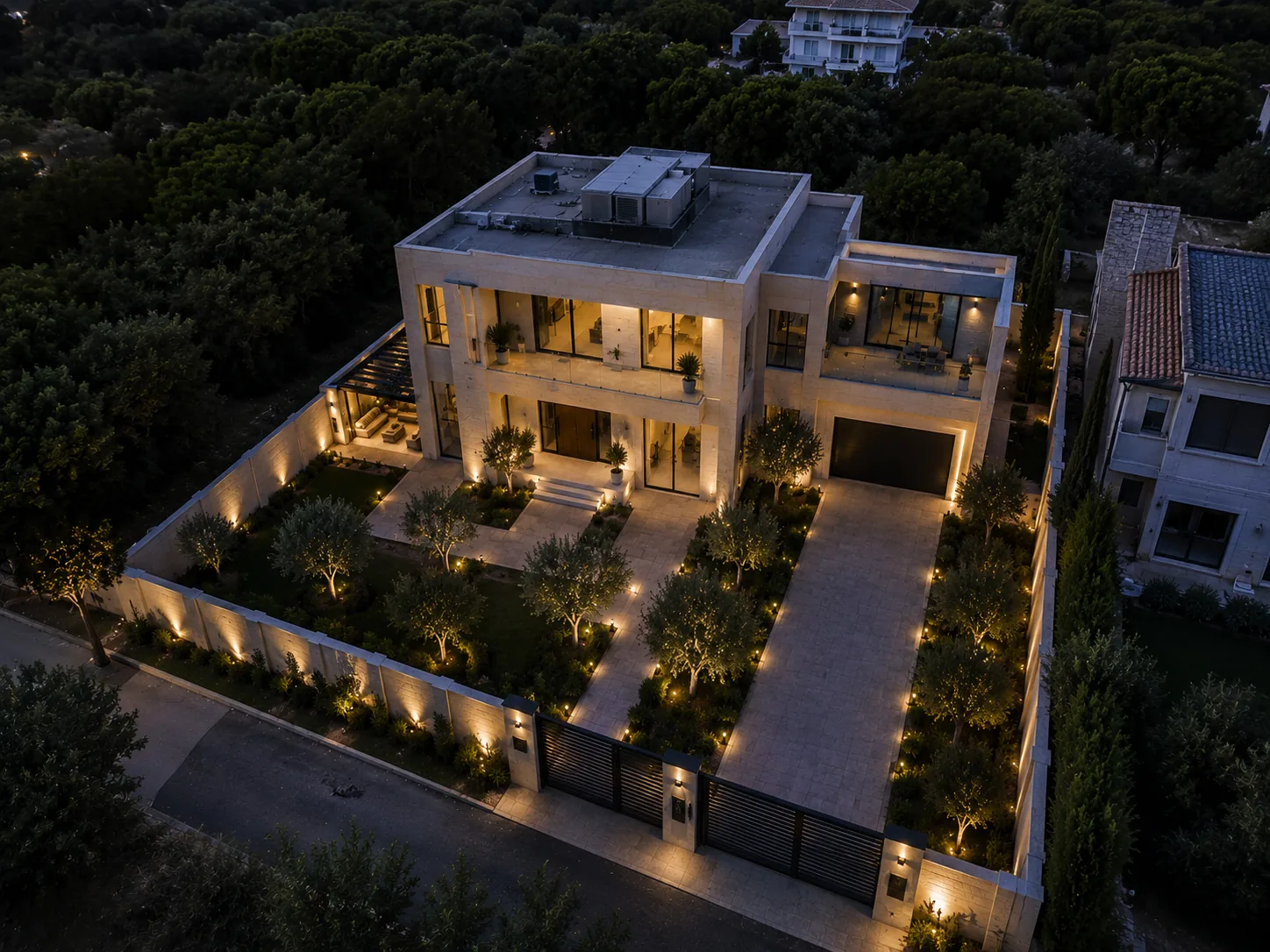
Circadian lighting and shading
Blinds and warm lighting shift through the day to follow the sun, holding the household’s sleep rhythm instead of fighting it.
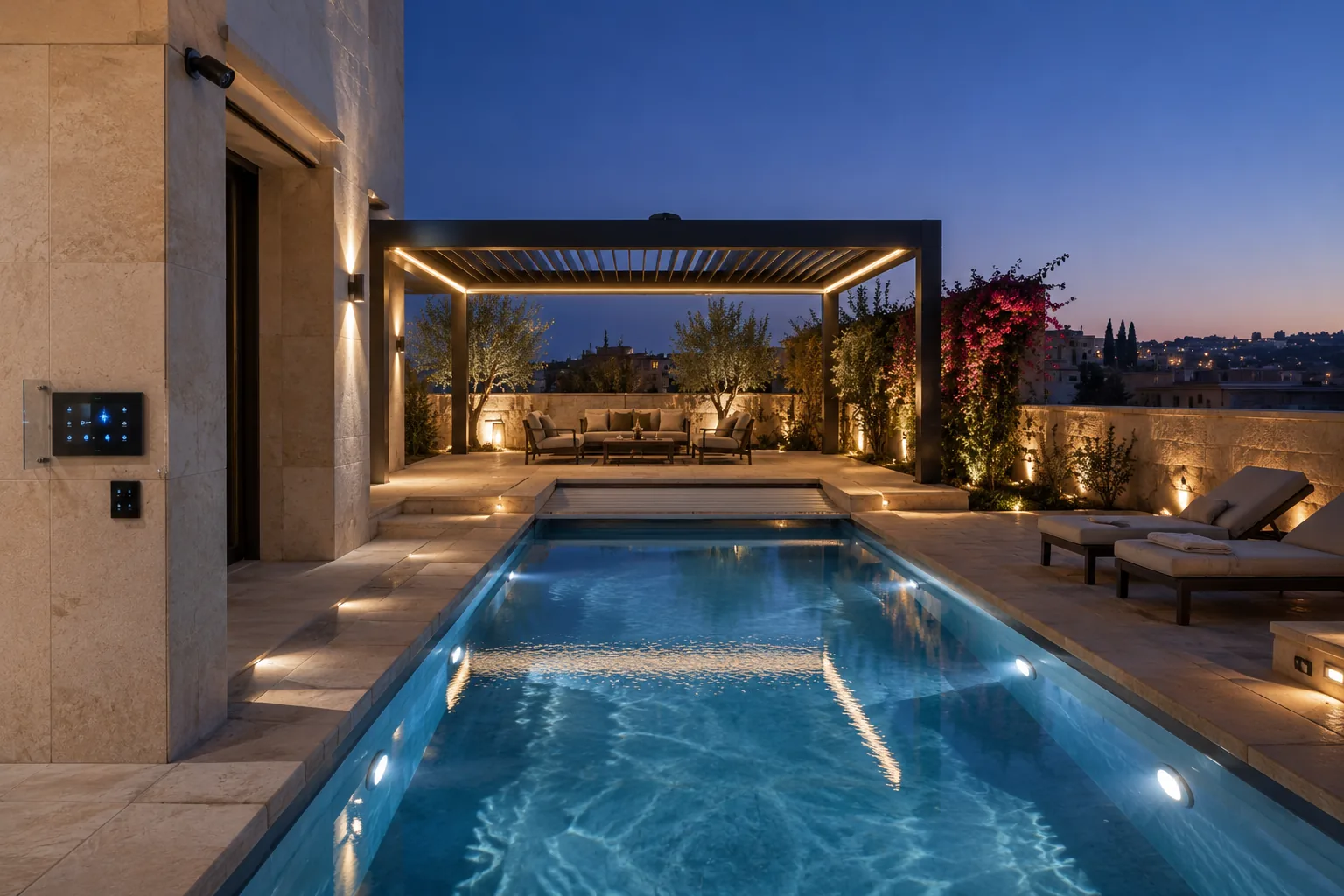
A home that anticipates you, built into the architecture rather than bolted onto it — and it keeps working when the internet does not.
The problem
Most “smart homes” are a pile of gadgets that do not talk. Each one brings its own app, its own login and its own cloud. They bury the household in screens nobody asked for, stop working the moment the line lags, and quietly gather the family’s habits on servers you will never see. It feels like an unsafe toy, not a fine house.
What we do about it
We design homes around one rule: the technology should vanish. One local system replaces the clutter, and it runs with no need for the internet. Control is wired into the building — behind the walls, into the keypads, into the routine — so it works in silence, keeps the family’s data at home, and fits how you live instead of asking you to learn an app.
A day in this house
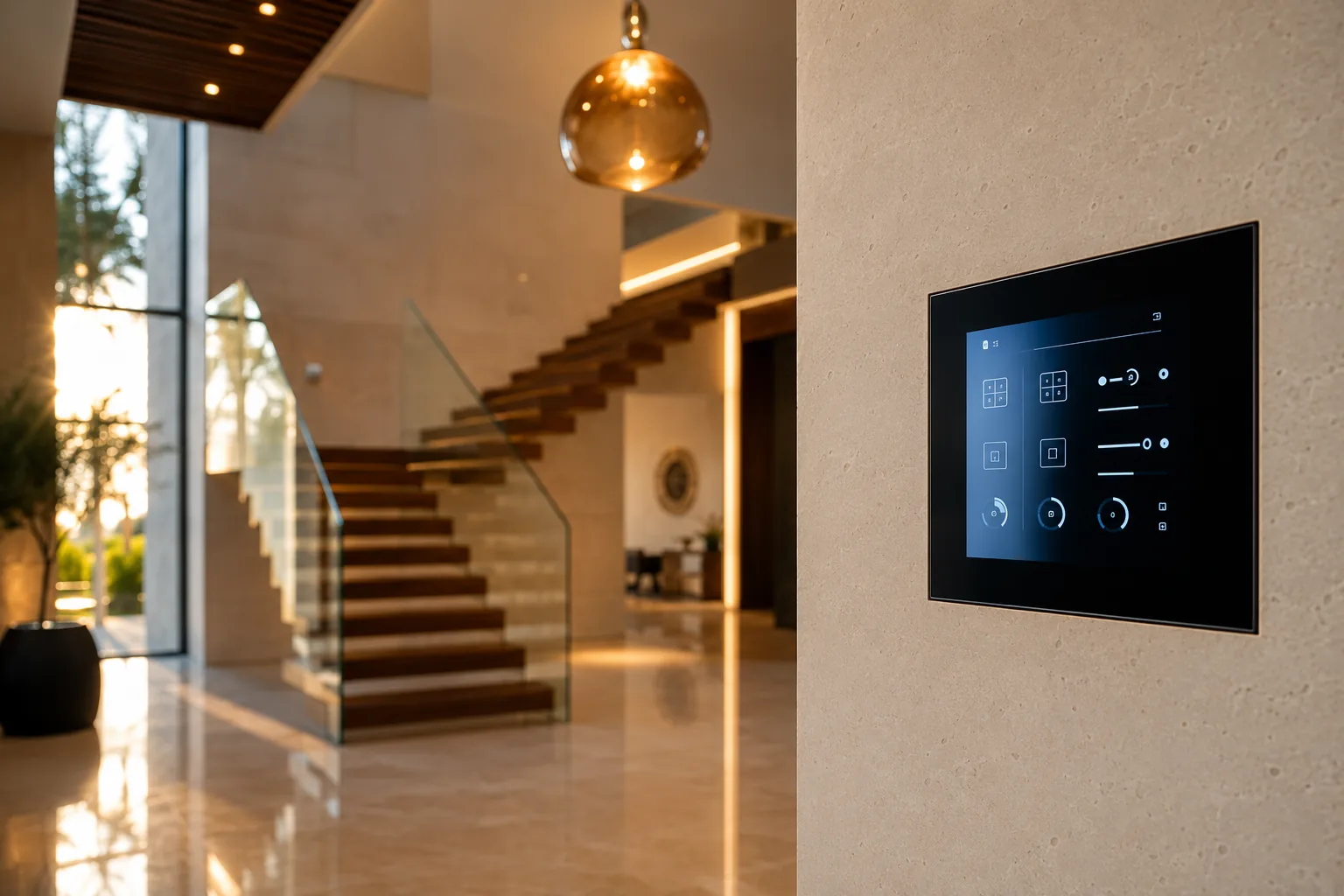
Shades ease open, the light warms out of cold white, and the bedroom — only the bedroom — comes up to temperature. Occupancy decides that, not a schedule somebody has to maintain.
Lights off, climate to setback, gate closed, cameras armed. One keypad by the door rather than four apps in your pocket.
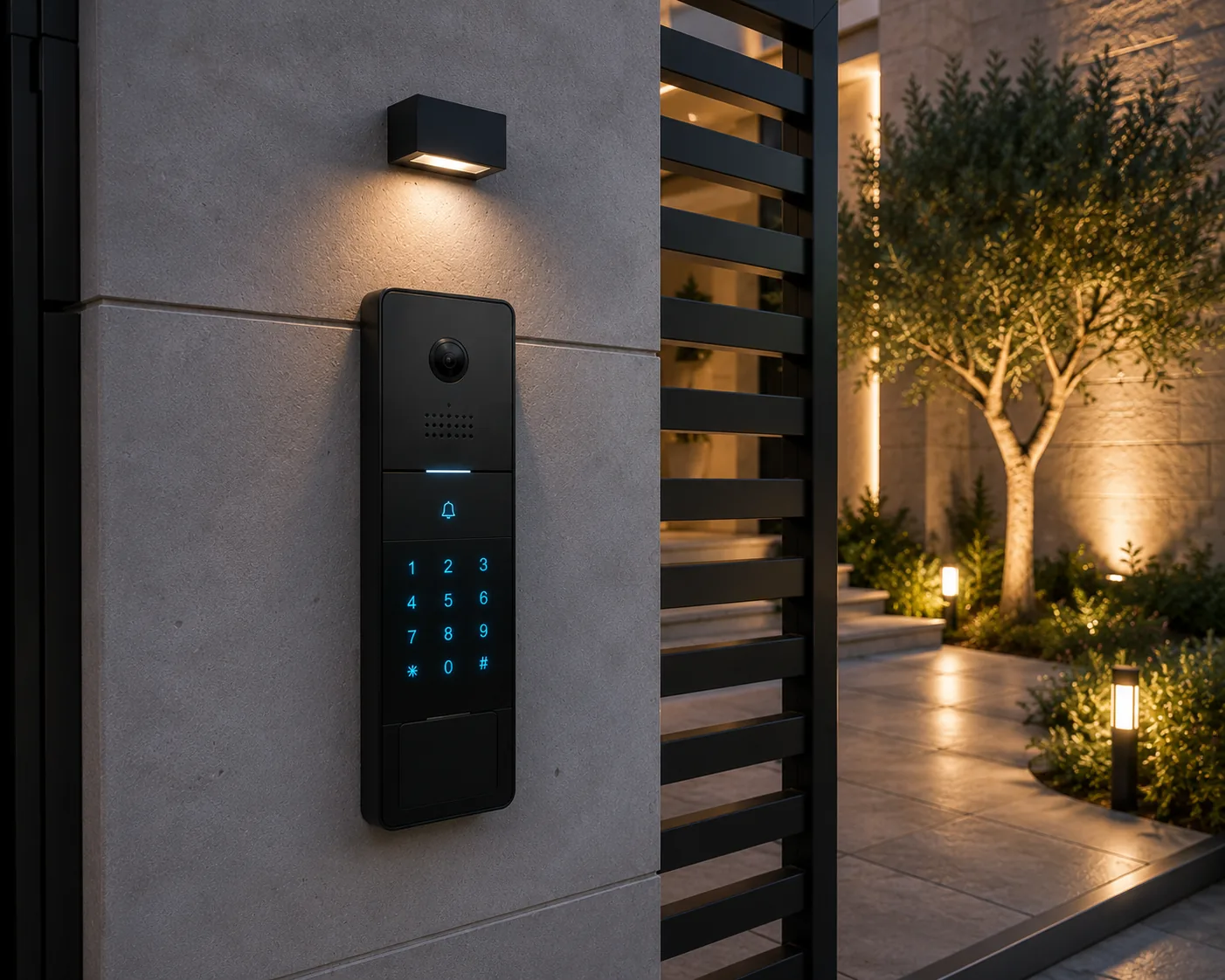
As the sun drops the lighting shifts warm and the shades follow dusk rather than a clock. Nobody adjusts anything, and nobody notices it happening.
Every scene, schedule, lock and climate zone runs on a server inside the house. The cloud was never in the path, so losing it costs you nothing at all.
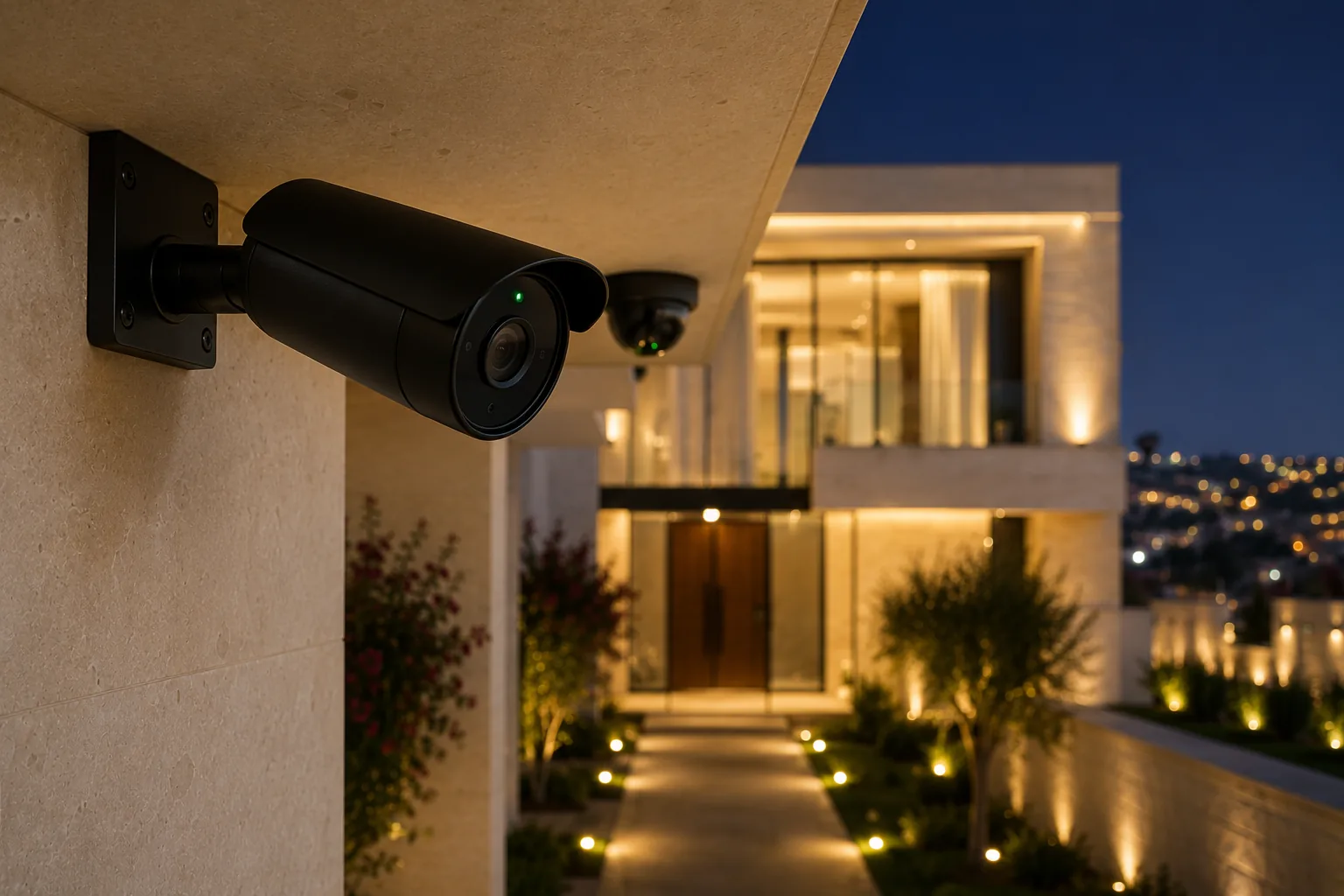
The house goes dark, the doors lock, the perimeter arms, and the path lights hold at ten percent for anyone still moving.
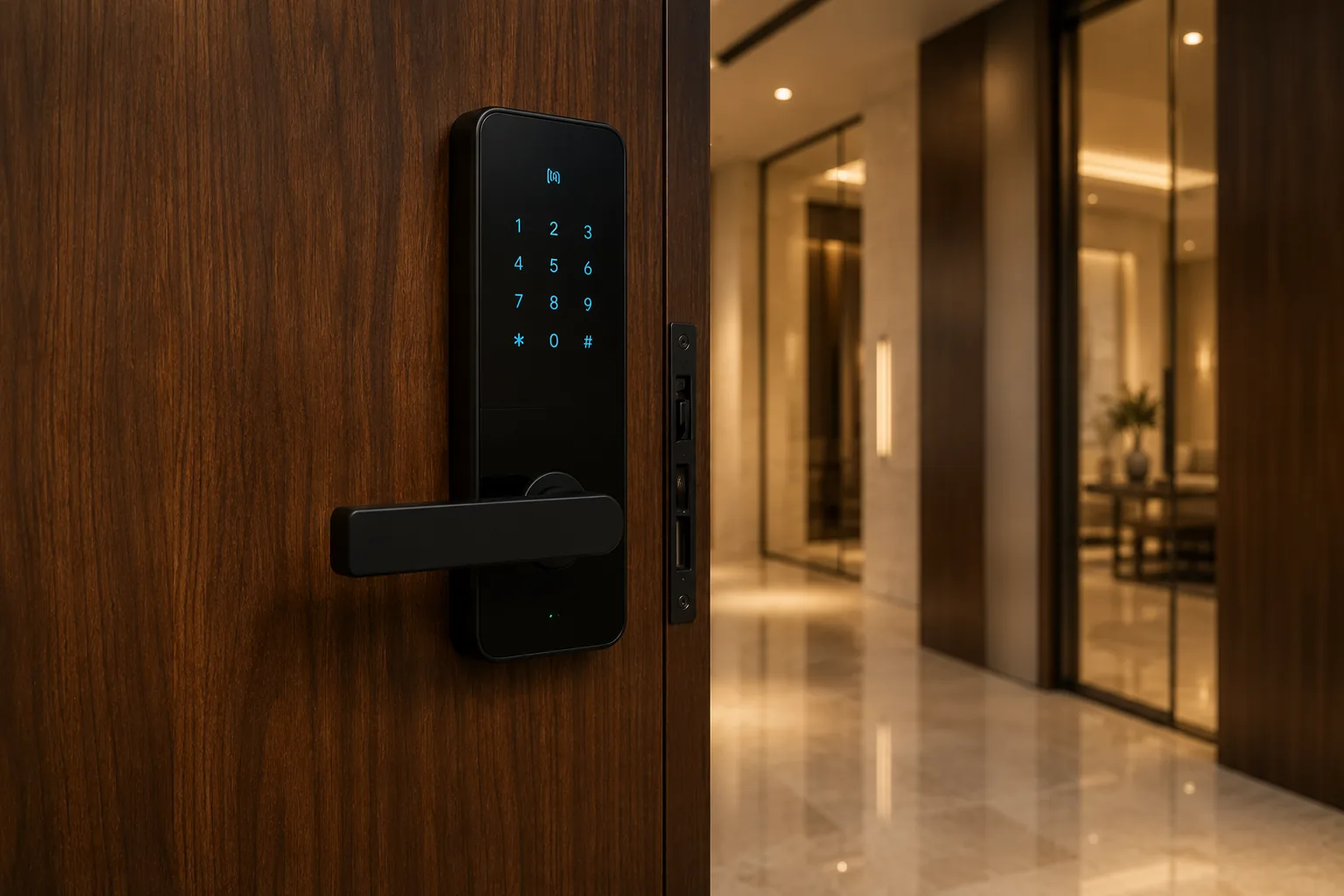
Climate falls to minimum, the cameras keep watching locally, and the house reports to you — not to a vendor whose servers you have never seen.
How we work
What you get
No app to open, no hub blinking on a shelf. The house learns the routine and gets out of the way.
Schedules, camera feeds and habits stay on your server, in your house. There is no third party to trust.
Scenes, switches, heating and alarms keep running through an outage, because none of them ever leaned on it.
Equipment & stack


In the field
Blinds and warm lighting shift through the day to follow the sun, holding the household’s sleep rhythm instead of fighting it.
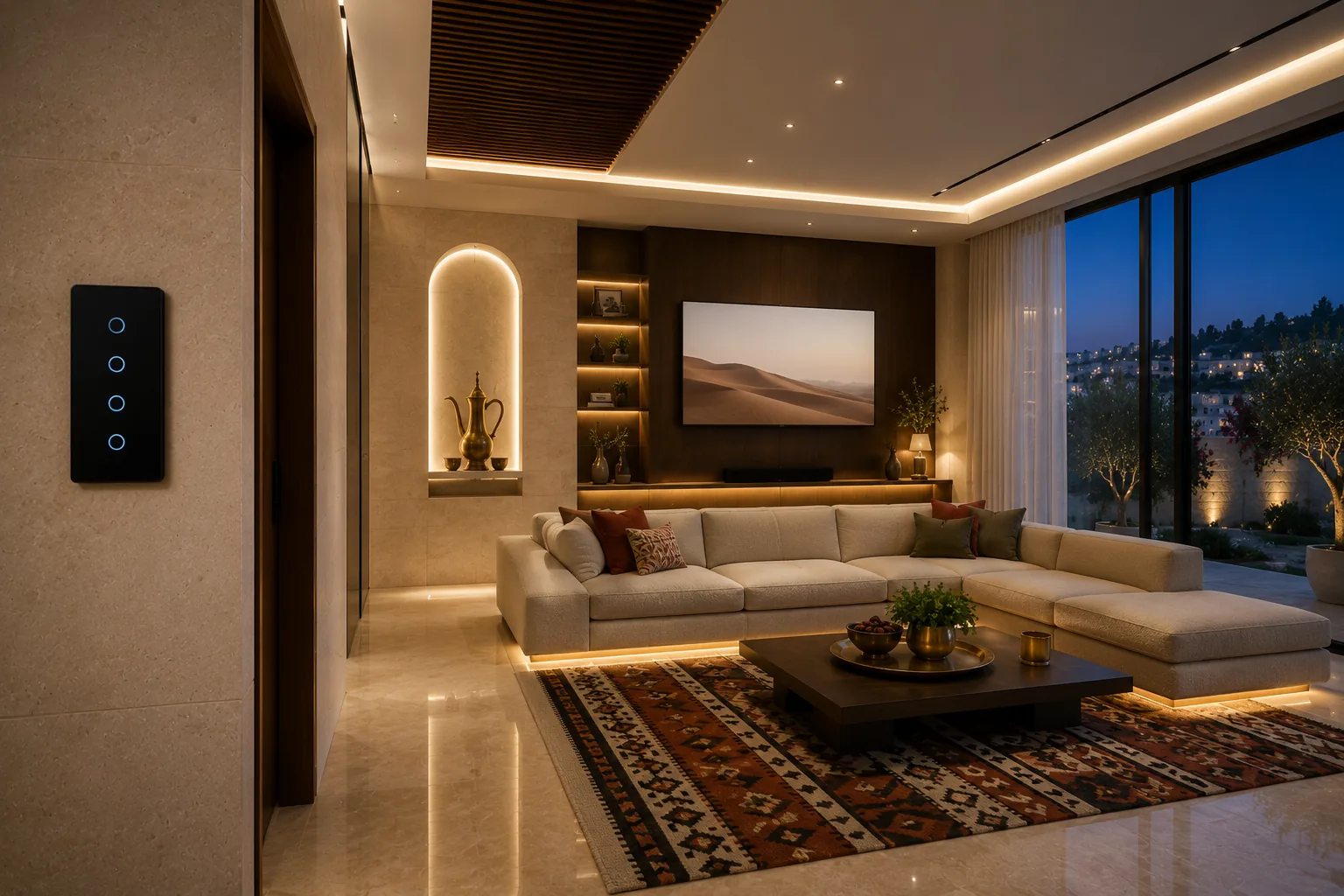
Room-by-room sensing heats and cools only where people are. That is where most of the waste goes.
Questions we get asked
The house runs on a local server, so it depends on the network being genuinely reliable — and it shares that server with cameras and custom sensors.
Next step
Send the constraint you are actually stuck on — a floor plan, a network that keeps dropping, a process nobody wants to do by hand. An engineer reads it and replies.