Back to services

Cameras that report, instead of only recording.

Local computer-vision models turn passive CCTV into an automated security analyst — and no frame of your video ever leaves the building.

The problem

A normal CCTV system is a passive archive. It tells you what happened, after it happened, if someone thinks to look. No guard can watch dozens of feeds at once. So a break-in goes unseen while it happens, the response starts late, and the tape becomes proof of something you could have stopped.

What we do about it

We run computer-vision models on your existing cameras, on hardware inside your building. The system watches every feed, all the time. It knows people from cars, and flags the moment something crosses a line that matters. It ignores the wind, the cat and the headlights that flood cheap systems with false alarms.

How we work

From first site visit to handover.

01 Optics and coverage mapping We map the environment and camera angles to remove blind spots before adding any intelligence on top.
02 Local AI server High-performance hardware is deployed on site to analyse feeds with low latency — keeping the video private and independent of any cloud.
03 Model tuning Detection models are tuned against your actual footage to reliably identify what matters and stay quiet about what does not.
04 Alerting and triggers Detections are wired into the channels your team already uses, and into physical responses such as lighting or gates.
05 Perimeter definition Virtual tripwires and zone defences are drawn around the areas that genuinely need them.

What you get

Prevention rather than evidence

A break-in is flagged while it is still at the fence, not found next morning on the tape.

The video never leaves

Every frame is read on your own server. No outside company holds footage of your site.

Operational data as a by-product

The same models that watch the fence can also report how people move through the space, and how long they stay.

Equipment & stack

Vision models
Custom-trained object detection tuned per site
Local compute
On-premises servers running hardware-accelerated containers
Optical infrastructure
High-resolution IP cameras on isolated PoE switching
  • Hikvision
  • Dahua
  • EZVIZ
  • Tapo

In the field

Corporate perimeter after hours

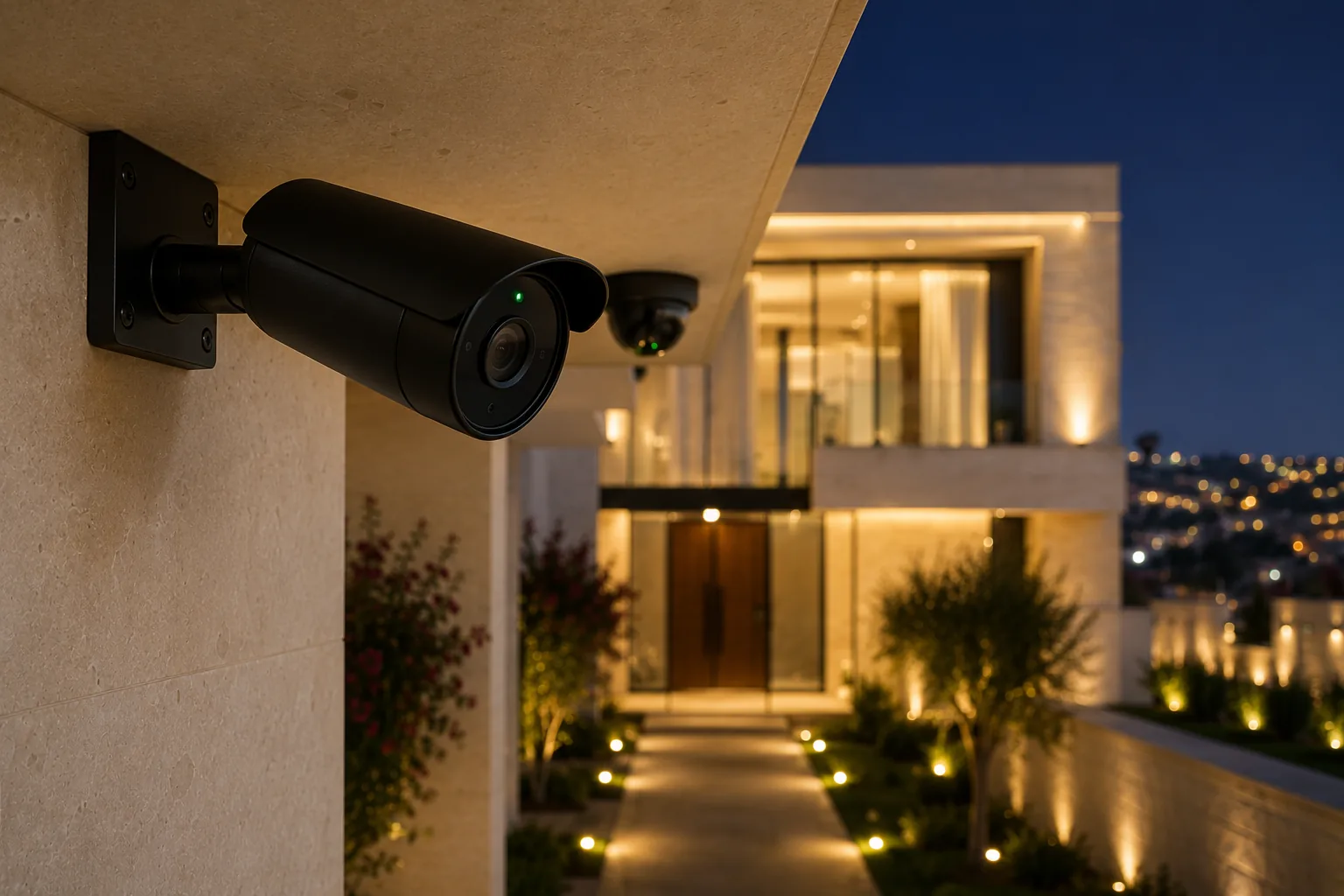
Local models pick out human shapes near a restricted edge after hours, and ignore animals and moving branches.
Vehicle access control

Number plates are read as the car arrives: the gate opens for a known one, and every other approach is logged.

Questions we get asked

Do we have to replace our existing cameras?
Usually not. If your cameras output a standard stream such as RTSP, our local AI servers can ingest and analyse them directly — the investment you already made becomes the input to a smarter system.
How is local analysis better for privacy than a cloud service?
Cloud cameras stream your internal video to a third party’s servers, which is both a confidentiality exposure and a permanent dependency. Our system processes every pixel inside your building; no video data crosses your perimeter.
Will it flood us with false alarms?
That is the failure mode we tune against hardest. Models are trained on your own footage, and alerts are scoped to specific zones, times and object classes — an alert that fires constantly is an alert everyone learns to ignore.

Detections are only useful if something happens next — which is where the automation layer and the local server come in.

Next step

Tell us the problem, not the product.

Send the constraint you are actually stuck on — a floor plan, a network that keeps dropping, a process nobody wants to do by hand. An engineer reads it and replies.

Chat with us on WhatsApp